| |
|
|
| |
Mira Mar Veterinary Hospital
|
|
| |
|
|
| |
|
|
| |
|
|
|
|
|
| |
May Newsletter
|
|
| |
|
|
| |
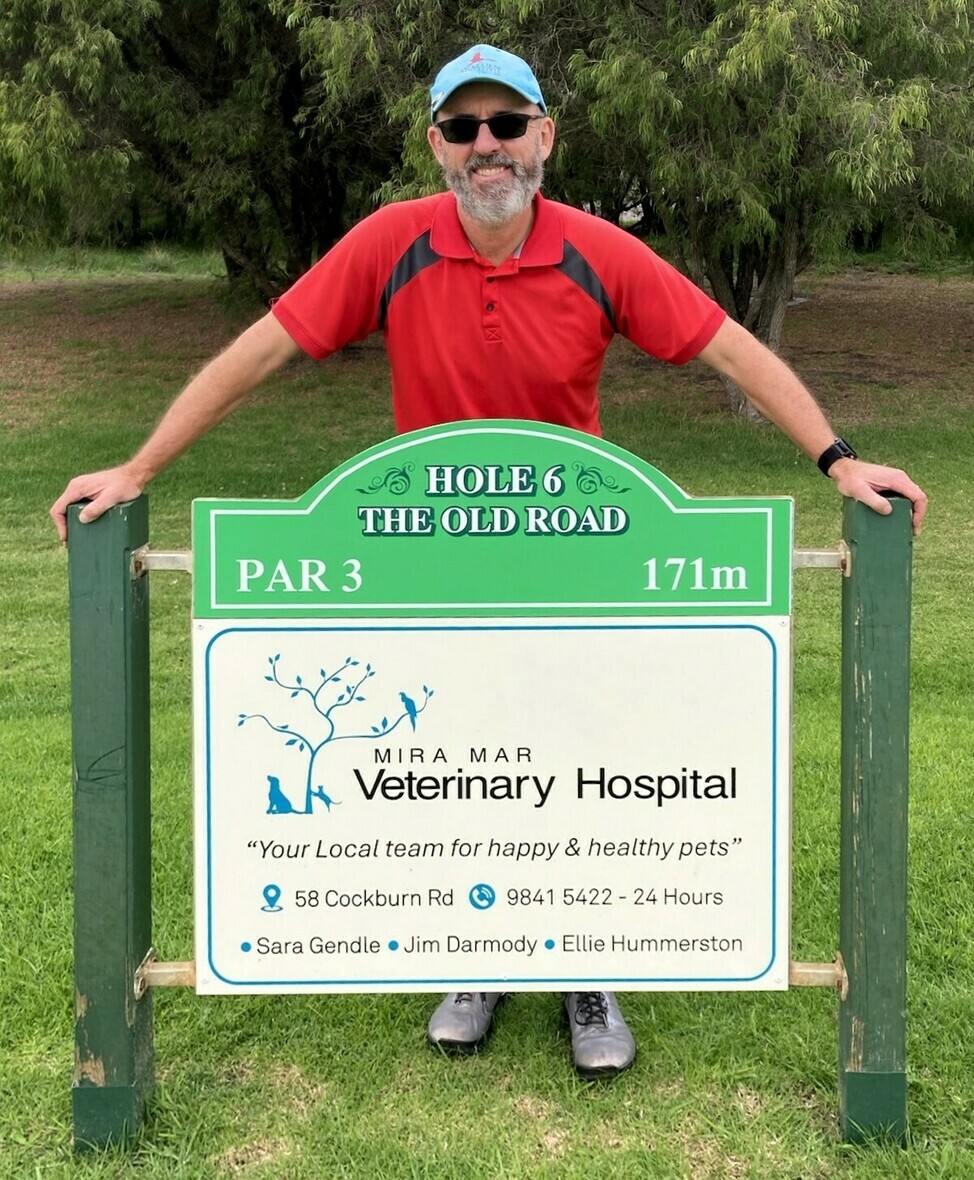
At Mira Mar Vets, we love supporting our local community! We'd like to thank the Albany Golf Club for the opportunity to sponsor the club and provide a snazzy sign for Dr Jim to pose with at the top of Hole 6! Doesn't it look great?
In this newsletter edition, we are celebrating the senior pets in our lives, as well as learning about a couple of common pet emergencies. We hope you enjoy it! |
|
|
|
|
| |
SENIOR PET MONTH IN MAY AT MIRA MAR VETS
|
|
| |
|
|
| |
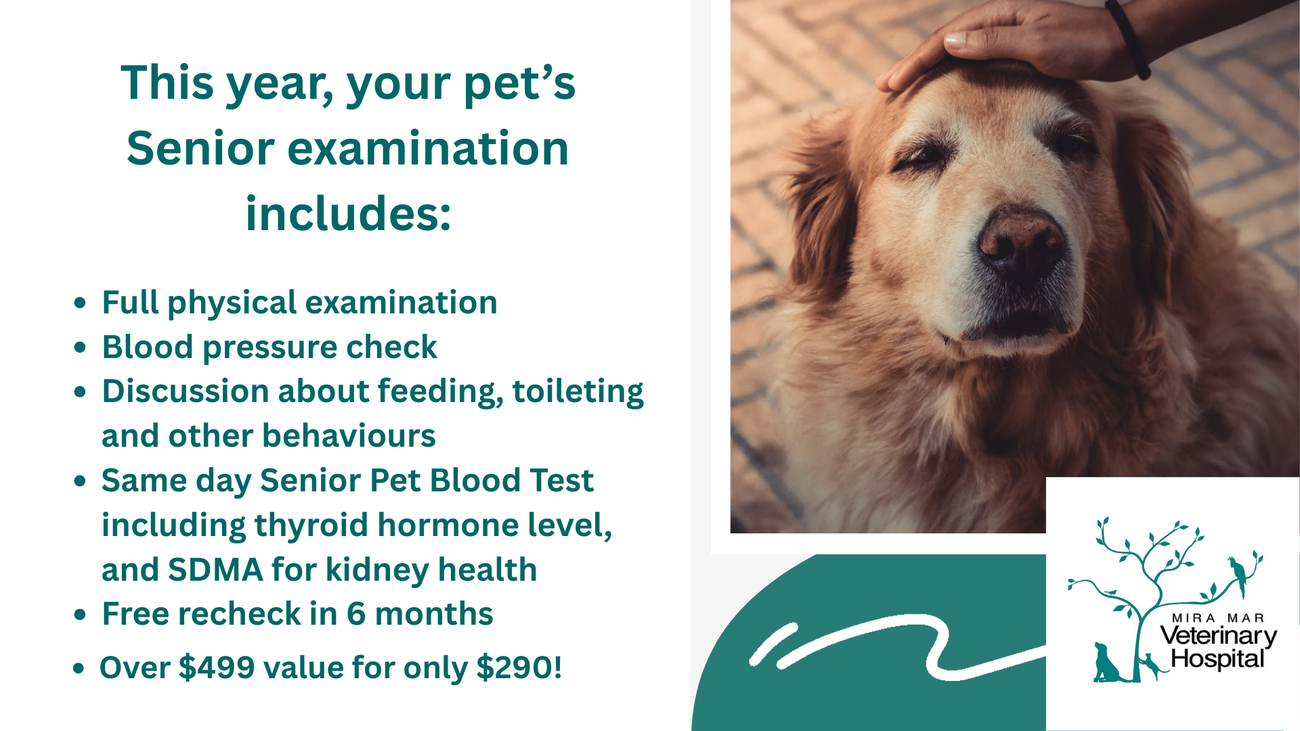
For many years, Mira Mar Vets have been dedicating one month of every year promoting the health and well-being of our older patients. Senior Pets are considered older than 7 years of age, or 5 years old for giant breed dogs.
We are very excited to announce that we will be running our Senior Pet Month again in May 2026.
Early detection and treatment are key to addressing many of the diseases and health issues we see arise as our pets age. Management of conditions such as arthritis, dental disease, diabetes, thyroid disease and kidney disease is always most successful when diagnosed before they are too far advanced.
In 2026 our Senior Pet Health Assessment will include the following;
- A complete head to tail physical examination with the vet
- A blood pressure assessment
- A blood test to screen for general health and several commonly seen diseases including kidney disease and thyroid disease
- A free recheck for your senior pet in 6 months
All of the above veterinary services normally cost over $499 but during senior’s month we will be reducing the cost to $290.
Plus, if your pet is assessed to be suffering from arthritis, we have a special offer on the pain relief injections Beransa (for dogs) and Solensia (for cats).
To book a Senior Pet Health Assessment please contact the clinic directly on 98415422.
We look forward to seeing you and your best friend soon!
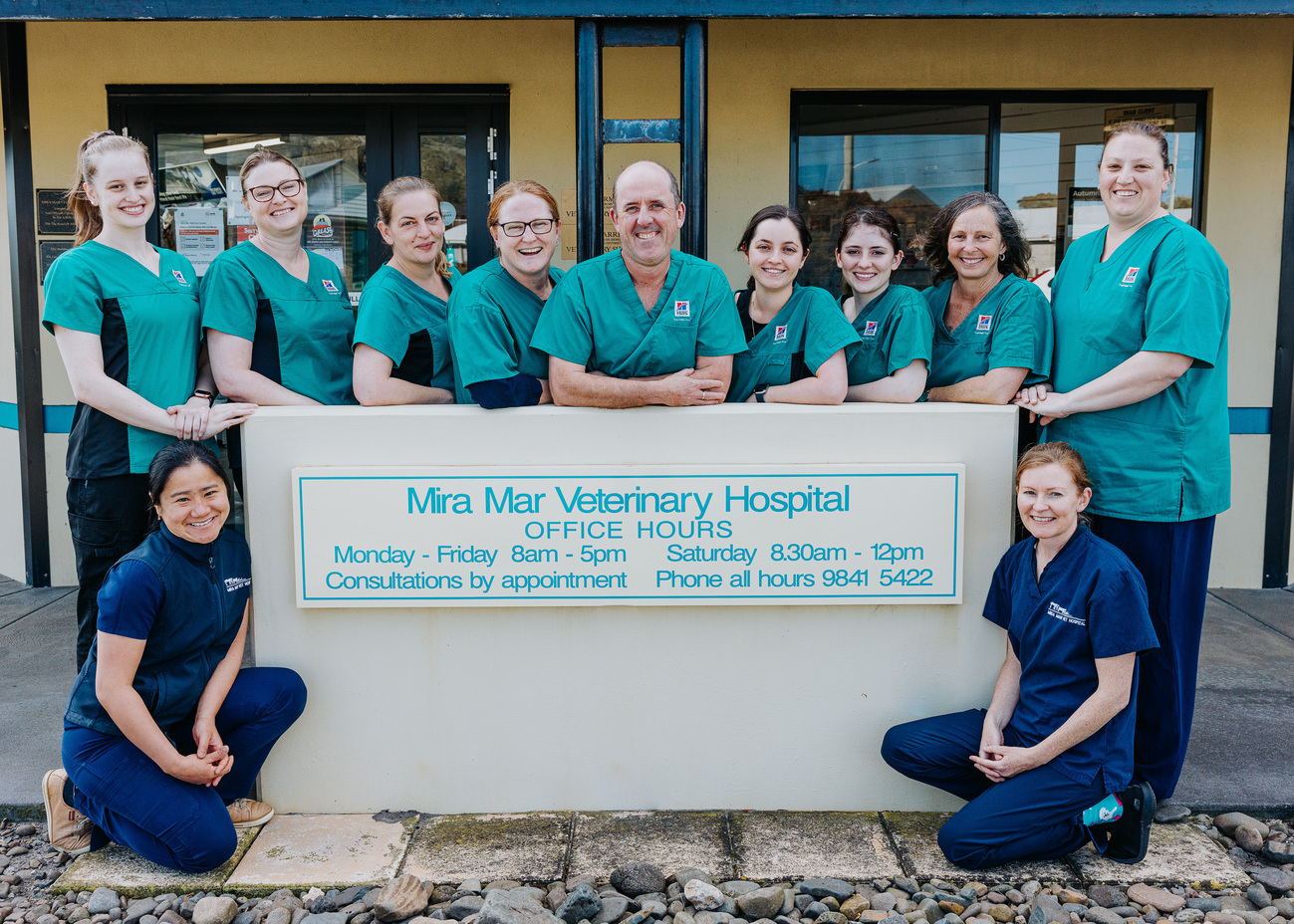
Regards, Jim, Sara, Ellie and all the team at Mira Mar Vets. |
|
| |
|
|
| |
Call Now!
|
|
|
|
|
| |
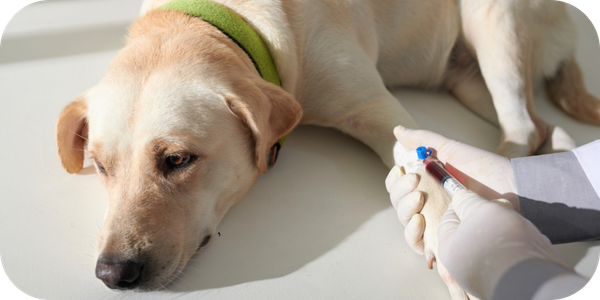
What can a simple blood test tell us?
|
|
| |
|
|
| |
Did you know that even basic blood tests can help us to diagnose certain issues in your pet, so that we can treat them more effectively?
Even in simple cases such as tummy upset in a young pet (where we don’t really suspect other organ problems), we may still suggest basic blood tests to check:
PCV/TP
PCV is Packed Cell Volume, which refers to the percentage of blood that is made up by red blood cells, while TP (total protein) refers to blood protein levels.
A decreased PCV can help us identify anaemia (low red blood cell levels), which can occur due to:
- Blood loss, e.g. if the gut is irritated and bleeding
- Lack of blood cell production, e.g. from a chronic illness
- Blood cell destruction, e.g. due to an autoimmune disease or certain types of snakebite
An increased TP can occur due to high levels of inflammation, whereas increased PCV and TP together can occur with “haemoconcentration” associated with dehydration (loss of water from the body).
Glucose levels
Significantly decreased glucose levels can lead to weakness or even seizures, and most commonly occur in:
- Very young puppies or kittens who are unwell and haven’t been eating
- Pets with sepsis (severe inflammation in the bloodstream)
- Pets who have eaten liver-damaging toxins, such as xylitol or sago palm
Mildly increased glucose levels can occur with stress. However, significant increases in glucose suggest potential diabetes.
Electrolyte levels
Electrolytes such as sodium, chloride and potassium can become unbalanced in sick pets, and can then further contribute to them feeling unwell. Electrolyte imbalances most commonly occur due to:
- Dehydration
- Significant vomiting and/or diarrhoea
- Kidney disease
For more information on general health assessment in dogs and cats, consult our knowledgeable team. |
|
|
|
|
| |
Oesophageal ouch!
|
|
| |
|
|
| |
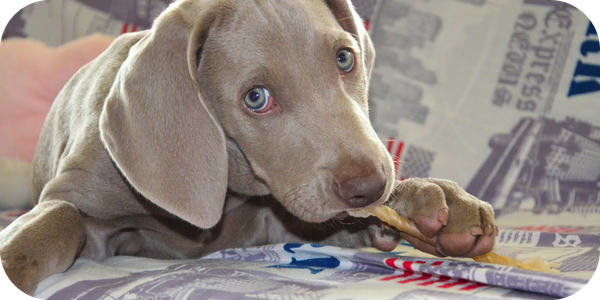
While most owners are aware of the potential for swallowed objects to become stuck in their dog’s intestines, many are less familiar with the potential for oesophageal foreign bodies, i.e swallowed items that become stuck in the oesophagus (the pipe between the throat and the stomach).
Unfortunately, this is very uncomfortable for the poor pet, and if the blockage can’t be removed quickly and gently, it can cause long-term damage to the oesophagus.
Here’s the lowdown on oesophageal foreign bodies, including common causes, symptoms, and potential treatment options.
Common oesophageal foreign bodies in dogs
Items that seem to most commonly get caught in the oesophagus include:
- Bones (particularly more brittle cooked bones)
- Fishing hooks
- Tough, fibrous chews such as rawhide
What symptoms does a dog with an oesophageal foreign body show?
Unfortunately, pets with an oesophageal foreign body may not always show symptoms straight away, and the symptoms may be relatively subtle, including:
- Changes in posture (e.g. awkward hunching or neck extension)
- Abnormal drooling
- Repeated swallowing
- Loss of appetite
- Regurgitation
How can oesophageal foreign bodies be diagnosed?
Unless the item consists of a dense material such as metal or chunky bone, it can be very difficult to detect on routine X-rays.
Some pets may require more advanced procedures, such as scoping (a tiny medical camera being passed down into their oesophagus), for diagnosis.
Did you know Mira Mar Vets are the proud owners of a small animal endoscope? We hope never to have to use it on your pet, but are very happy to have this advanced equipment available to use if needed.
Treatment
Treatment will depend on the type of foreign body present, how long it has been present for, and what veterinary services are available, and may involve a general anaesthetic for:
- endoscopic removal (using a scoping camera with a tiny grabbing device)
- surgery
- the use of a long medical tube to gently push small, smooth-edged items down into the stomach, or long medical forceps to pull items out
For more advice on reducing the risk of oesophageal foreign body issues in your dog, consult our knowledgeable team. |
|
|
|
|
| |
Bile vomiting: why is my pet vomiting yellow foam
|
|
| |
|
|
| |
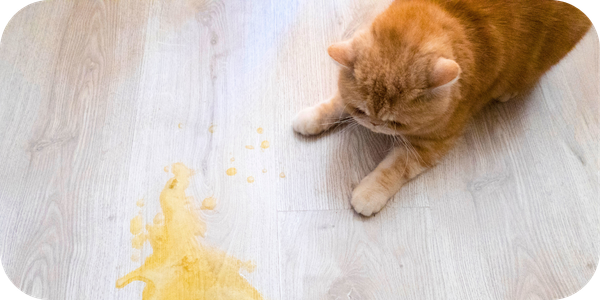
“My pet has been doing occasional little foamy yellow vomits – should I bring them in?”
This is a common question fielded by our team! Here’s why your pet could be bringing up yellow vomit, and when they should be checked by our friendly vets.
What does yellow vomit mean in dogs and cats?
Yellow vomit indicates that your pet has vomited despite having an empty stomach, so it has brought up fluid that is a mix of stomach juices and refluxed bile.
Your pet could be vomiting due to an actual gut irritation, such as:
- If they’ve eaten a food that didn’t agree with them, or something that was spoiled or toxic
- If they’ve got a tummy bug
- If they’ve got a blockage, e.g. a hairball or a non-food item they’ve eaten
- They’ve got an underlying stomach disease, such as inflammatory bowel disease
Alternatively, your pet could be vomiting due to another type of health issue that is causing them to feel nauseous, such as:
- Pancreatitis (inflammation of the pancreas)
- Kidney disease
- Liver or gallbladder disease
Lastly, dogs can also vomit bile occasionally but seem otherwise well with a condition called bilious vomiting syndrome. This is when a dog’s empty tummy becomes irritated with refluxed bile, and occurs most commonly in pets who are fed only one meal a day, though it can also occur in some pets fed twice daily too.
Is a vet visit warranted?
If in doubt, it’s always a good idea to check in with our friendly team for further advice. However, we’d definitely recommend a prompt veterinary assessment for your pet if they:
- Seem lethargic or in pain
- May have eaten something toxic
- Have vomited more than twice in a 24-hour period or vomited over several days
- Are showing any other symptoms of unwellness, such as weight loss, diarrhoea, or changes in drinking
|
|
|
|
|
Bloody diarrhoea in dogs: when it’s an emergency
|
|
|
| |
You may not have heard of AHDS (Acute Haemorrhagic Diarrhoea Syndrome) in dogs, but you may be a little more familiar with its previous name of HGE (Haemorrhagic Gastroenteritis)!
Here’s more about AHDS, and why dogs affected with this condition should receive prompt veterinary treatment.
What is AHDS?
AHDS in dogs involves sudden and severe gut upset that causes affected dogs to pass bloody diarrhoea (which can range from pink and pasty to almost strawberry jam-like) and often vomit too. These poor pets rapidly lose body fluid and protein via their gastrointestinal tract, and can develop potentially life-threatening dehydration and low blood pressure.
What causes AHDS?
The exact trigger for AHDS isn’t always clear, with potential causes including the pet eating something irritating or toxic, stress, or infections (i.e. a “tummy bug”).
It tends to be more common in small breeds such as Maltese, Poodles, Mini Schnauzers and Yorkshire terriers. |
|
|
| |
Can I treat my pet at home?
Healthy adult pets with mild vomiting and diarrhoea (1-2 bouts per 24 hours, with no obvious blood present) who are still acting bright and energetic can be monitored at home. After 6–12 hours of fasting, they can be offered small, bland meals with a low-fat protein such as skinless cooked chicken, spring water tuna or low-fat cottage cheese, plus a gentle carbohydrate such as boiled rice or sweet potato.
However, pets showing any of the following symptoms should be assessed by a vet promptly, as they will likely need further supportive care:
- Very bloody or profuse diarrhoea
- More than two vomits in a 24-hour period
- Appearing lethargic or in obvious pain
- Not able to hold down water
Young puppies or older dogs with known health issues should also be checked promptly, as they can be more rapidly affected by dehydration and low blood sugar.
For more information on gastrointestinal care in pets, consult our tummy-terrific team! |
|
|
|
|
|
| |
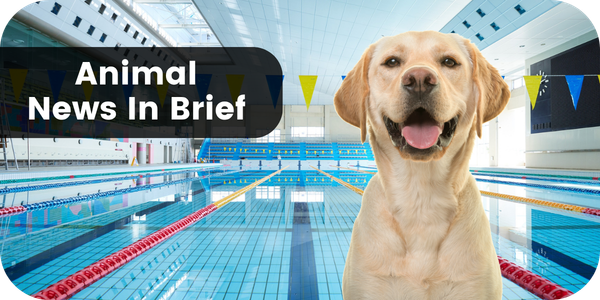
Clover, Elton and Evie, three Guide Dogs Queensland dogs, became unexpected stars at the Australian Open swimming championships, with athletes stopping by for pats before racing. The trial gave swimmers a calm break from the pressure of competition. Read more at ABC News.
A Brisbane man has chosen to remain homeless rather than give up his dog after being told pets were not allowed in temporary accommodation. He continues to stay with his dog while searching for housing options that will accept them both. Read more at ABC News.
Do you know?
A cat’s slow blink is often a sign of trust. When your cat slowly closes and opens their eyes at you, it can be their way of saying they feel safe. |
|
|
|
|
| |
Predator-free farm helps endangered species thrive
|
|
| |
|
|
| |
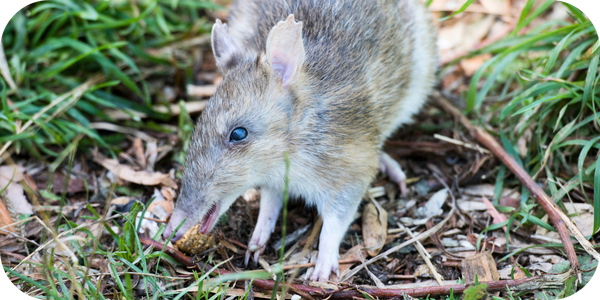
A predator-free farm in western Victoria is helping endangered species such as eastern barred bandicoots and eastern quolls recover in a safer habitat. A long exclusion fence keeps out feral cats and foxes, while trail cameras and AI monitoring help conservationists track wildlife activity. The project also shows how farming and conservation can work together on the same land. Read more at ABC News. |
|
|
|
| |
This email contains comments of a general nature only and is not intended to be a substitute for professional veterinary advice. Please always consult your vet for specific advice on your pet's individual needs.
All content © Petpack 2026 |
|
|
|
[Footer]
|